
Why is my eyelid twitching?!
It isn’t painful, just incredibly annoying. Sometimes. The twitching can even affect your vision, causing the image out of that eye to look like it’s doing a little “wiggle”.
Eyelid twitching is most commonly caused by a condition called Myokymia. Myokymia is simply a clinical term for fine, spontaneous muscle contractions that can happen anywhere in the body. When it hits the eye, it’s usually the superior orbicularis oculi muscle that is acting up.

How do I get my eyelid to STOP twitching?
Identify Your Triggers (And What You Can Do)
The best solution for an eyelid twitch is to play detective and figure out what is triggering it. Eyelid myokymia can often be linked to our daily habits, though it can also be idiopathic, which is a fancy medical word meaning it has no clear cause.
If your eye is acting up, try these simple lifestyle tweaks first:
- Catch up on sleep – Fatigue is one of the biggest culprits. Try to get a few early nights in a row.
- Watch the caffeine – Step away from the espresso. Too much caffeine frequently sets off muscle tremors.
- Manage stress – Stress manifests in mysterious ways, including eye twitches. Take frequent breaks, practice deep breathing, or enjoy a walk outside.
- Cool it down – Apply a cold compress or ice pack over your closed eye for a few minutes to help soothe the muscle.
- Lubricate and soothe – Try using over-the-counter artificial tears to combat dry eye strain. If allergies are the root cause, an over-the-counter artificial eye drop (like Zaditor) can work wonders to ease the symptoms.
Potential Serious Causes: When is it more than a standard twitch?
Most eyelid twitches are entirely harmless and resolve on their own once you rest up and cut back on the coffee. However, if your eyelid is still doing the cha-cha after a few days of making healthy adjustments, it is worth seeking professional advice.
Keep an eye out for these signs: 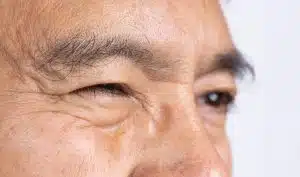
- Persistent twitching that lasts for more than a week, even after addressing your common triggers.
- Severe Closure (Blepharospasm) when the twitching becomes so intense that your eyelid actually clamps shut or you find it genuinely difficult to open your eye. This is a twitch that requires prompt medical attention.
- Spreading symptoms such as facial weakness, twitching in other parts of your face, drooping, or sudden changes in your vision.
In very rare cases, a persistent eyelid twitch that refuses to quit could be linked to an underlying neurological condition, such as Bell’s palsy, Myasthenia gravis, or other nerve and muscle disorders. While this is highly unusual, checking in with your eye care provider is the best way to get total peace of mind.
Advanced Treatment Option: For severe, persistent cases of regular eyelid twitching that won’t go away, a doctor can occasionally use localized Botox injections in the lid to safely freeze and stop the muscle twitch entirely.
How is Myokymia diagnosed?
If you have a persistent twitch, despite catching up on sleep, reining in the caffeine, and dialing down stress, come and see us. The exam is straightforward and stress-free. Typically you’ll talk through your recent symptoms, review your health history, and we’ll check for underlying everyday issues that might be contributing, like undiagnosed dry eye or seasonal allergies.
Our main goal is to rule out those rarer conditions and build a personalized plan to get your eyes back to normal.
Ready for Peace of Mind?
While most twitches resolve on their own, you shouldn’t have to just suffer through the annoyance. If your twitch has lasted more than a few days, or if you’re concerned about your eye health, don’t hesitate to reach out.
Schedule an Appointment or Contact Us today!
Last updated on August 6, 2026.


 Millerwoods Health Care Campus


